 Get In Touch
Get In Touch
Get In Touch
Blog
Buying before completion changes what you are actually agreeing to. Here is the plain version.
An off-plan purchase means committing to a home that does not physically exist yet. You are buying against drawings, specifications, and a delivery commitment rather than against something you can walk through. That single difference drives almost every other difference in the process.
The reservation form holds a unit. The Sales and Purchase Agreement is the document that matters — it defines the unit, the specification, the payment schedule, and the expected handover window. Read the specification annexe as carefully as the price, because that annexe is what the developer is obliged to deliver.
In the UAE, off-plan buyer payments are held in a project escrow account regulated by the relevant emirate’s authority and released to the developer against verified construction progress. This is the structural protection behind off-plan buying, and the escrow details are worth confirming for any project you consider.
You typically pay less than for an equivalent completed home, spread across the build period. In exchange you accept construction timelines, and the fact that renders are indicative rather than contractual. Both sides of that trade are real. Anyone presenting off-plan as pure upside is selling, not advising.
Two plans with the same headline price can ask very different things of you.
A payment plan is a cash-flow schedule, and the headline split tells you less than most people assume. What matters is when each instalment falls due, and what triggers it.
Some instalments fall on fixed calendar dates. Others fall due when construction reaches a defined stage. Milestone-linked payments track real progress, so a slower build defers your outlay. Time-linked payments do not. Establish which type each instalment is before planning around it.
Plans are often described by their pre-handover split while the largest single payment sits at handover itself. If you intend to mortgage that portion, arrangements should begin well before completion rather than at it.
None of these are hidden — they simply sit outside the instalment schedule. Build them into your own arithmetic rather than treating the plan as the total.
Dubai Production City and Ras Al Khaimah attract buyers for genuinely different reasons.
AFM builds in both, and the reasoning is not interchangeable. Treating the UAE as a single undifferentiated market is the most common analytical mistake buyers make.
An established, serviced district with existing infrastructure, a defined tenant profile, and a mature rental market. AFM Bonito sits here, with 189 residences. The case for a location like this rests on demonstrated demand and known dynamics rather than on projection.
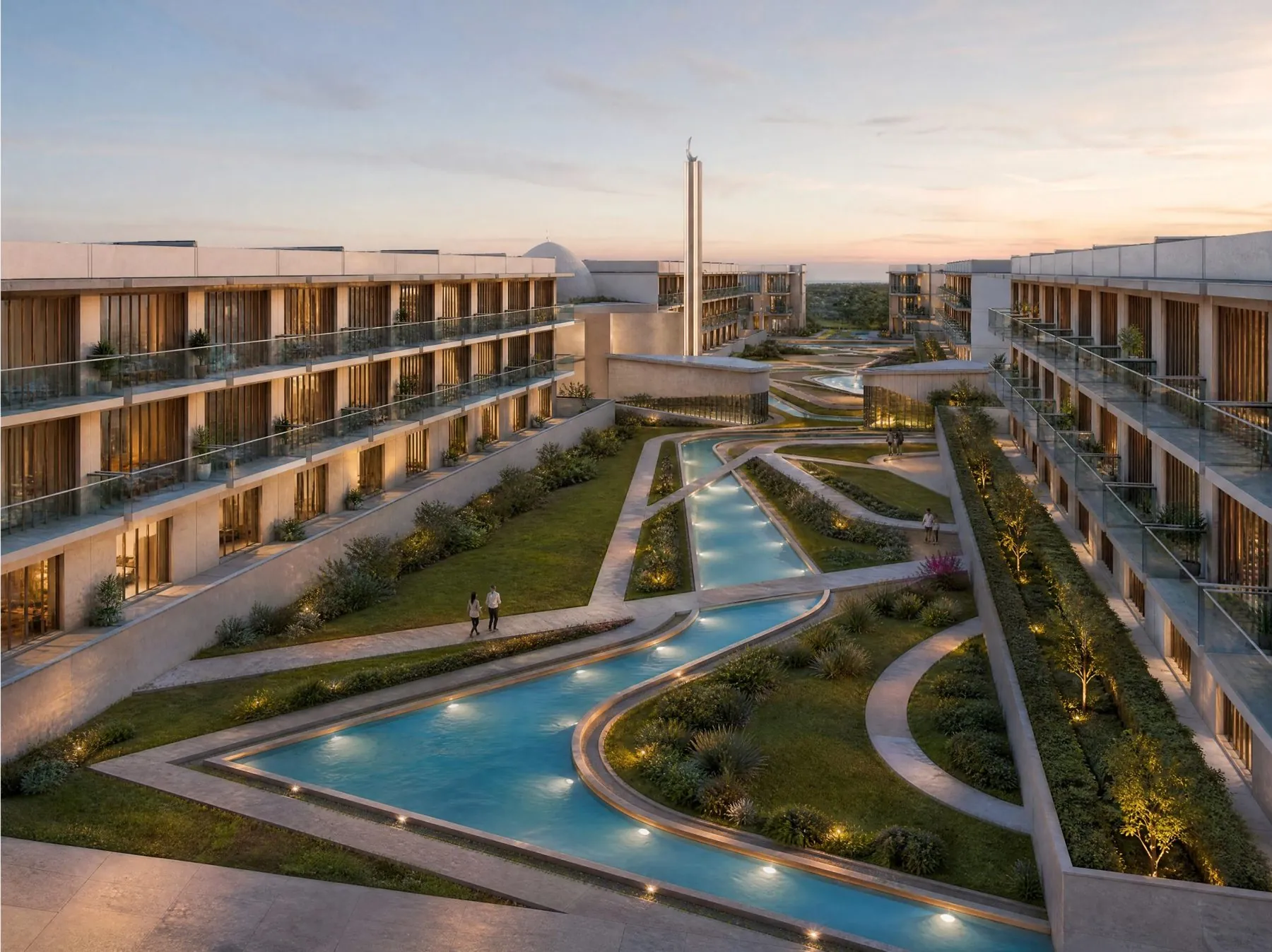
A market at an earlier point on its curve, with substantial tourism and infrastructure investment underway and considerably more available land. AFM Township sits here — 420 villas across more than one million square feet, a footprint that would be difficult to assemble in central Dubai at all.
Density and convenience point one way. Space, low-rise living, and an earlier-stage market point the other. Neither is the better answer in the abstract; the right one depends on whether you are buying somewhere to live or something to hold, and on your time horizon.
A short list that separates a considered decision from an enthusiastic one.
Ask these before signing anything. A developer confident in their project will answer all of them without hesitation.
If an answer is vague, treat the vagueness as the answer. To put any of these to our team directly, get in touch.